
automation
How HVAC Companies Can Automate No-Show Appointment Recovery
· Gross AI
A technician who drives to an empty house represents a real loss. Wasted labor, wasted fuel, and a slot that another paying customer could have filled. No-shows are one of those problems that feel small on any given day but compound into something significant over the course of a busy season. For HVAC companies booking a high volume of service and maintenance calls, even a modest no-show rate can translate into a meaningful number of wasted truck rolls per week.
The frustrating part is that most no-shows are not intentional. Customers booked the appointment days or weeks in advance, something came up, and they forgot to call. The booking was not top of mind, and without a nudge, it stayed that way. That is a solvable problem.
The Case for a Layered Reminder Sequence
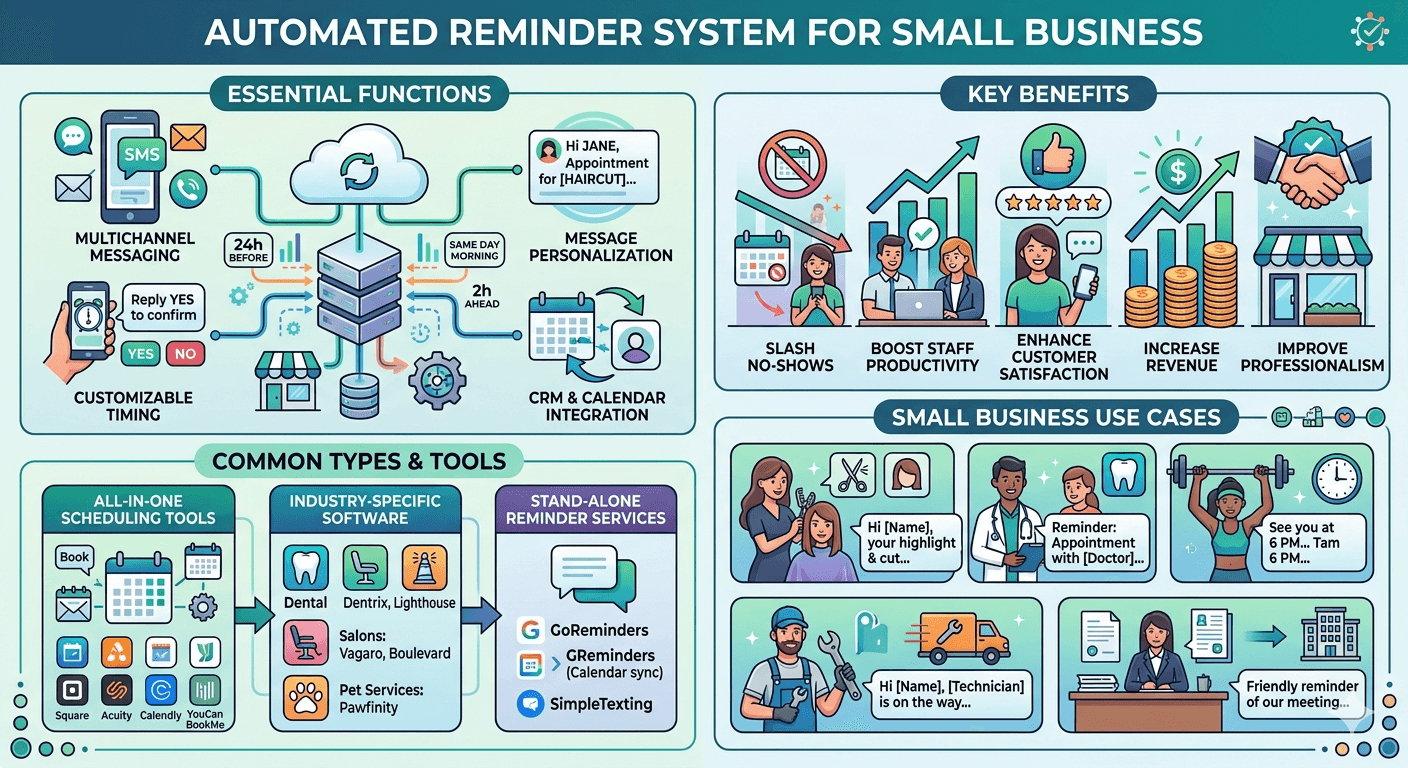
A single confirmation email sent at the time of booking is not enough to prevent no-shows. The customer who was engaged when they called to schedule may have completely forgotten about the appointment by the time it arrives. What reduces no-shows reliably is a sequence of reminders, spaced out in a way that keeps the appointment visible without becoming a nuisance.
The structure that tends to work well for HVAC companies starts with an immediate booking confirmation, sent by text message or email within minutes of the appointment being booked. This gives the customer something to reference and signals that the company is organized. Two days before the appointment, a reminder goes out asking the customer to confirm the time still works for them. The morning of the appointment, another message goes out with the technician's estimated arrival window. Some companies add a final notification when the technician is on the way, converting a vague four-hour window into a concrete "I'll be there in 45 minutes" that keeps the customer at home and off the phone wondering what is going on.
Each message should make it simple to reschedule. That single detail captures a lot of value. A customer whose schedule changed but who did not know how to easily reschedule will often just not be there when the technician arrives. A customer who can tap a link and pick a new time will usually do exactly that, turning a potential no-show into a rescheduled job rather than a lost one.
What the Automation Actually Handles
None of the above requires a dispatcher manually sending texts at 8am on a busy morning. Field service platforms and scheduling tools can trigger each message based on the appointment time already in your system, and they can flag appointments that have not been confirmed so a dispatcher only needs to follow up with the handful that need a human touch.
That shift matters more than it sounds. Instead of a dispatcher working through a list of calls each afternoon to confirm the next day's appointments, the system handles confirmation passively and only surfaces exceptions. Dispatchers can spend that time on higher-value work, and the confirmations happen consistently rather than only on the days when someone remembered to make the calls.
For HVAC companies specifically, tools like Sameday are designed with home service businesses in mind, connecting inbound booking with automated follow-up sequences that run without ongoing attention. Most major field service platforms also include configurable reminder settings that can accomplish much of the same outcome without requiring a dedicated tool, though the depth of the reminder logic varies by platform.
Recovering Jobs After a No-Show Happens
Even with a solid reminder sequence, some appointments will be missed. The question is whether those customers disappear or come back. Without any follow-up, the odds of re-booking drop quickly. The customer feels awkward, you feel frustrated, and the job quietly goes to a competitor when the customer finally decides to call someone.
An automated no-show recovery message, sent within an hour or two of the missed appointment window, changes that dynamic. A short, low-pressure message acknowledging that the appointment was missed and offering a simple path to reschedule keeps the conversation open. Customers who missed an appointment are usually still in the market for the service; they just need an easy way back in.
This is not complicated to set up. Most platforms that handle appointment reminders can also be configured to trigger a follow-up when an appointment passes without a confirmed completion. The operational lift is minimal, and the jobs it recovers more than justify the setup time.
The Math Is Straightforward
HVAC companies operating at scale know what a truck roll costs when the customer is not there. Add that up across a season and the number gets uncomfortable. A reminder sequence and a recovery flow do not eliminate no-shows entirely, but they reduce them enough to make a measurable difference in completed jobs per week without adding headcount.
The setup time for most of these systems is measured in hours, not weeks, and the ongoing maintenance is minimal once the sequences are configured correctly. Appointment flow automation is one of the faster, more concrete payoffs available to home service businesses. If you want to talk through what would work for your specific scheduling setup before committing to any platform, a free discovery call is a reasonable place to start.
Ready to find your fix?
Want to know if this applies to your business?
Book a free audit and we'll document the bottlenecks costing your business time and money. The findings are yours to keep, no cost.