
industry
Autonomous marketing agents for dental practices in 2026
July 28, 2026 · Gross AI
What autonomous marketing agents mean for a dental practice
In 2026, most small businesses have experimented with AI in some way. One survey summarized by Capsule CRM notes that depending on how you define “using AI,” adoption numbers range from single digits to well over half of all small firms. Another 2026 guide from Digital Applied highlights that about 68% of small businesses use AI tools regularly, yet roughly 77% have no formal AI policy. That gap between dabbling and discipline is exactly where an autonomous marketing agent for dental practices either helps or quietly creates risk.
When vendors talk about autonomous marketing agents, they are describing systems that can plan and execute multi-step campaigns with less prompting than a basic chatbot. In NoimosAI’s 2026 guide to local marketing agents, NoimosAI frames modern agents as “autonomous teammates” that can research topics, draft SEO content, and schedule social posts with minimal human nudges. Warmly’s 2026 overview of AI agents for small businesses makes a similar point: the promise is not just generating text, it is orchestrating whole go-to-market workflows.
For a dental owner, that sounds like a dream: something that keeps campaigns moving while the team is in the operatory. The catch is that most practices are still in the early “exploration” phase that Digital Applied describes, where staff test tools ad hoc without clear rules. Bringing in an autonomous agent without fixing that first can magnify the chaos instead of reducing it.
Where autonomous marketing agents actually help a dental practice
The goal is not to “have an agent.” The goal is to stop specific leaks in your week. For dental practices, those leaks usually fall into a few predictable buckets.
- Consistent content and local SEO. Platforms like NoimosAI are built around multi-agent squads that can research local keywords, draft SEO blog posts, and schedule matching social updates. Used well, that can keep your practice visible in search and in newer “AI answer” surfaces without someone on the team babysitting every post.
- Campaign follow through. Warmly’s guide on AI agents emphasizes alignment with existing workflows, ease of setup, and human handoff as key evaluation criteria. An autonomous agent plugged into your CRM can help move patients through a planned campaign (for example, promoting whitening or clear aligner days) instead of letting one-off email blasts die after week one.
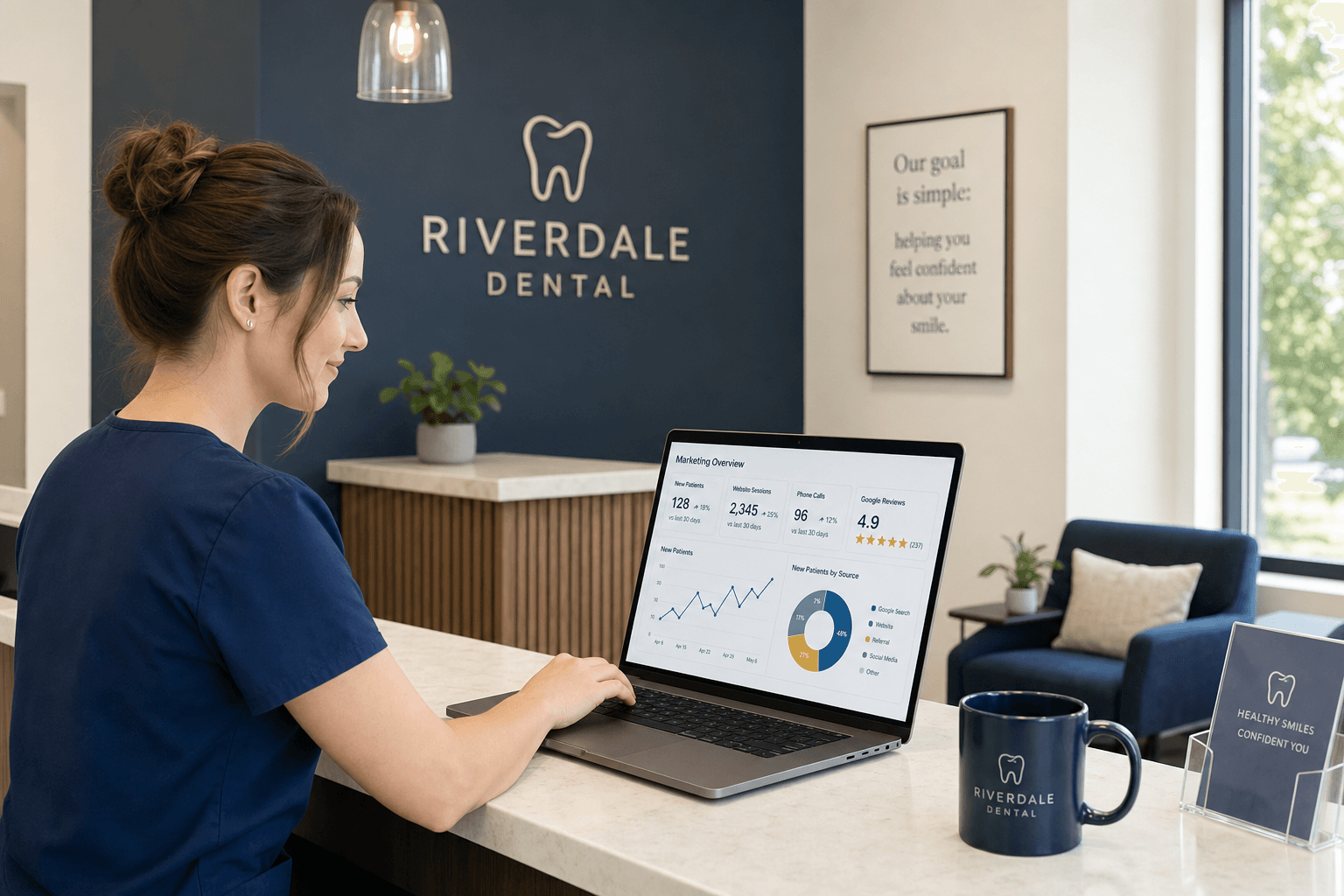
- Reporting that a busy owner can actually scan. Many agent platforms ship with dashboards that summarize what campaigns ran, which channels drove clicks, and where replies came from. That is not magic, but it does mean you are not digging through several tools just to answer “What did our marketing actually do last month?”
When these agents work, they do not replace the person who understands your patients. They take over the repetitive work of publishing, tagging, and checking basic metrics so that your front desk and treatment coordinator can focus on conversations that require judgment.
Risks and guardrails for a dental owner
The upside stories are real. A 2026 survey summarized by ColoradoBiz and the SBE Council found that 82% of small business employers use at least one AI tool, with the typical firm using about five tools across operations. Around 66% reported revenue gains from AI, and owners reported saving several hours per week. Those are encouraging signals.
The same survey also underlines why guardrails matter. When multiple tools are in the mix, it is easy to lose track of where data goes and who is responsible for results. Combined with Digital Applied’s finding that most small firms using AI have no written policy, the risk is clear: automation marches ahead faster than governance.
For a dental practice looking at autonomous marketing agents, a few practical guardrails make a big difference:
- Decide what data the agent can and cannot see. Marketing agents often work well with anonymized performance data (opens, clicks, channel performance) and basic audience segments. They should not be reading detailed treatment notes or full medical histories just to send a hygiene reminder.
- Keep a human in the loop on anything public-facing. NoimosAI’s own marketing stresses a “live work feed” where a human can review drafts and posts before they go live. Whichever platform you choose, protect your brand voice by routing posts and emails through a quick human check before publishing.
- Make a one-page AI policy before you scale. Capsule’s adoption roundup points out that different surveys measure different kinds of AI use, but they converge on one pattern: AI shows up first in content, customer engagement, and marketing. That is exactly where a simple written policy about tools, approvals, and sign-off can keep experiments from turning into liabilities.
These guardrails are not about slowing things down. They are about making sure that when an autonomous system works on your behalf, it is still operating inside boundaries you set on day one.
How to pilot an autonomous marketing agent in your practice
Instead of handing your whole online presence to an agent overnight, treat the first deployment as a focused pilot. A structured small-business roadmap works better than a big-bang rollout, and several of the adoption studies above make the same point in different language.
- Start with one measurable workflow. Pick something concrete, like keeping your monthly hygiene reactivation campaign on track or running a three-month promotion for a specific service. Define what “good” looks like in plain terms: emails and texts sent on time, a reasonable open rate, and patients actually booking.
- Wire the agent into tools you already use. Warmly’s article on AI agents for small businesses argues that the best agents fit the workflows you have instead of forcing a rebuild. For a dental practice, that might mean connecting to your existing CRM or marketing platform rather than standing up a totally separate stack.
- Set a 60–90 day review window. The Digital Applied guide notes that many small firms see AI ROI over a three to six month window. For a pilot, commit to at least one full quarter before you judge results. During that period, track simple, visible metrics rather than trying to model lifetime value.
- Document what worked and what broke. At the end of the pilot, write down where the agent saved real time and where it created extra cleanup for your team. That writeup becomes the input to any bigger rollout, and it is exactly the kind of material that belongs in a broader operations audit.
If you already feel like your marketing is a pile of half-finished ideas, you are not alone. Capsule’s roundup notes that broad self-reported surveys tend to show between roughly 55 percent and 75 percent of small businesses saying they use AI in some way, yet the mix of tools and workflows looks very different from one firm to the next. The practices that actually get leverage from autonomous marketing agents are the ones that slow down long enough to map the leaks first, then point automation at a specific one instead of “everything.”
The hardest part is not picking a platform. It is deciding which parts of your week you are willing to let an autonomous system own, and which moments with patients still need a human face. Once you have that clarity, an agent stops being a buzzword and becomes one more way to cross out the tedious marketing work that keeps getting pushed to Friday.
Ready to find your fix?
Want to know if this applies to your business?
Book a free audit and we'll document the bottlenecks costing your business time and money. The findings are yours to keep, no cost.